Dental Anxiety: How to Stop Being Scared of the Dentist
You're not alone if going to the dentist makes you anxious. Studies suggest that dental anxiety affects more than a third of adults, and for a meaningful portion of those people, the fear is intense enough to cause them to cancel appointments, delay care for years, or avoid the dentist entirely. Across the North Shore and Central Massachusetts — in communities like Danvers, Peabody, Salem, Beverly, Leominster, and Fitchburg — many people are quietly managing dental problems that have grown more serious simply because fear kept them from coming in.
At Hallmark Dental, with offices in Danvers and Leominster, we've worked with anxious patients throughout our careers, and we can tell you with confidence: dental anxiety is one of the most common things we encounter, and it's one of the most manageable. Understanding where the fear comes from, how dentistry has changed, and what practical tools are available can make an enormous difference — and so can finding a dental team that genuinely listens.
Why Dental Fear Is So Common — and So Persistent
For most people, dental anxiety has roots in a past experience. A painful or rushed procedure, an insensitive comment from a provider, or a frightening emergency visit at a young age can create a powerful emotional association that persists for decades. The brain is remarkably good at storing threat memories, and the sensory cues of a dental office — the smell, the sounds, the bright overhead light — can all act as triggers that bring the original fear flooding back, even when the current situation is completely different.
Fear of pain is the most commonly cited reason for dental avoidance, but it's far from the only one. Fear of needles, fear of gagging, fear of losing control, and even fear of embarrassment about the current state of one's teeth are all very real drivers. Many patients who have avoided dental care for years feel deeply ashamed of their teeth — and that shame becomes a barrier in itself, because they assume the dentist will judge them. In our experience, nothing could be further from the truth. Every dental team member we've trained understands that avoidance is usually fear-driven, not negligence-driven, and compassion is always our starting point.
Perhaps the most insidious aspect of dental anxiety is that it tends to get worse over time, not better, when left unaddressed. Avoiding the dentist leads to oral health problems that accumulate quietly. When the pain or visible damage finally forces a visit, there's more to treat — which reinforces the belief that the dentist is a place of bad news and uncomfortable procedures. Breaking this cycle is entirely possible, and it starts with a single, low-stakes step.
The Reality of Modern Dentistry
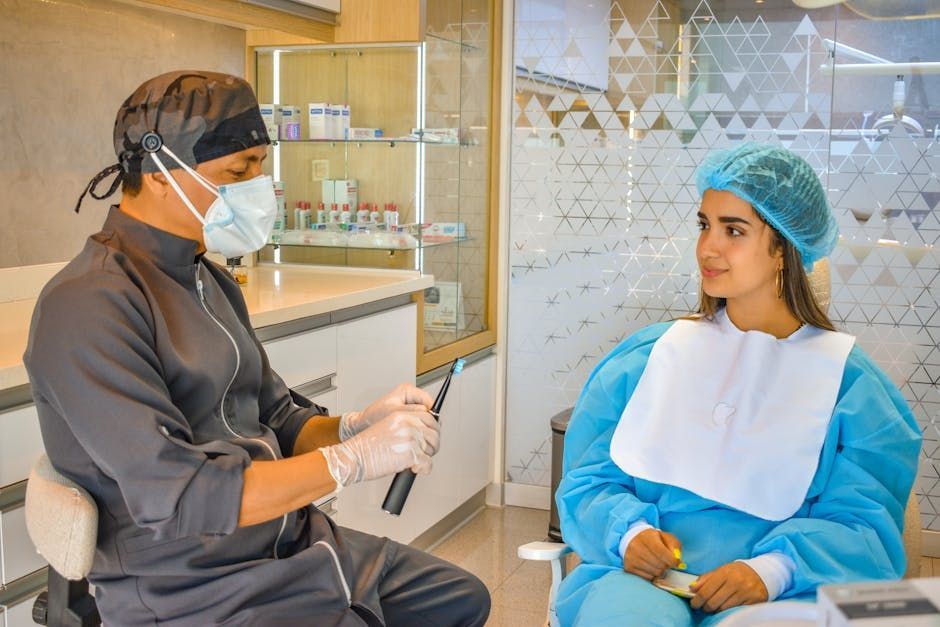
One of the most helpful things we can share with anxious patients is that dentistry today bears little resemblance to the dentistry of twenty or thirty years ago. The equipment is quieter, the techniques are gentler, the anesthetics are more reliable, and the entire culture of patient communication has shifted in ways that make a real difference for people who struggle with anxiety.
Modern local anesthetics are highly effective — when properly administered, they eliminate pain during procedures with great reliability. The injection itself is frequently the most feared aspect of a dental visit, but it can be made significantly more comfortable through topical numbing gel applied to the tissue before the needle, slow and careful delivery technique, and the use of finer-gauge needles than what was used in previous decades. Many patients who brace themselves for a painful injection are genuinely surprised by how minor the sensation actually is.
Equally important is the shift in communication culture. At Hallmark Dental, we use a tell-show-do approach with patients who are anxious — describing exactly what we're going to do before we do it, showing the patient any instrument before it enters their mouth, and inviting questions at every stage. We establish a clear signal — usually a raised hand — that the patient can use at any moment to pause the procedure, no questions asked. This simple protocol restores a sense of control that is, for many patients, the single most anxiety-reducing element of the visit.
Practical Tools for Your Next Appointment
If you experience dental anxiety, there are several straightforward strategies that can meaningfully reduce your stress before and during your appointment. The first and most impactful is simply telling us. When we know a patient is anxious, we adjust everything — the pace, the communication, the amount of time we take with explanations. You don't have to white-knuckle it alone. Letting the team know before the appointment, even just in a note when you call to schedule, makes a real difference.
Timing your appointment thoughtfully can also help. Morning appointments are often best for anxious patients — there's less time for anticipatory anxiety to build through the day, and the office tends to be calmer. Bringing headphones and a playlist, podcast, or audiobook you love is a simple and surprisingly effective way to create a personal buffer between you and the sounds of the office. Many patients tell us that music or a familiar voice in their ears transforms the experience completely.
Breath work is another tool that's easy to practice and genuinely effective. Slow, controlled exhales activate the body's parasympathetic nervous system and physically reduce the stress response. Try breathing in for four counts, holding briefly, and exhaling slowly for six counts. Practicing this in the waiting room and during any procedure can lower your heart rate and help your body stay in a calmer state throughout the visit.
When You've Been Away for a Long Time
One of the most common concerns we hear from patients who've been avoiding dental care is: "It's been so long — I'm embarrassed about what they'll find." We want to address this directly: we don't judge. Every single person who walks through our door in Danvers or Leominster deserves respectful, compassionate care regardless of how long it's been or what condition their teeth are in. Our job is to help you move forward, not to make you feel worse about the past.
For patients who haven't been in for a long time, we often recommend starting with a consultation — no cleaning, no instruments, just a conversation. This visit is an opportunity to meet the team, ask questions, explain your concerns, and form a plan together at whatever pace feels manageable. Many patients who come in for a "just talking" visit are surprised to find that by the end of the appointment, they feel ready and willing to proceed with a cleaning right then. Others prefer to take it slower, and that's completely fine too.
Sedation Options for Greater Comfort
For patients whose anxiety is severe or whose dental needs are complex, sedation dentistry offers an additional layer of comfort. Nitrous oxide — laughing gas — is a mild, inhaled sedative that takes effect within minutes and creates a feeling of relaxation and mild detachment from the procedure. It wears off quickly, doesn't require someone to drive you home, and has an excellent safety record. Many anxious patients find nitrous oxide genuinely transformative — it takes the edge off in a way that makes the visit not just manageable but actually comfortable.
Oral sedation — a prescription medication taken before the appointment — is available for patients who need deeper relaxation. The patient remains conscious and responsive but is in a significantly calmer state throughout the procedure. Discussing your anxiety level with our team is always the right starting point for identifying which option, if any, might be a good fit for you. There is no level of dental anxiety that disqualifies you from care — quite the opposite. We want to help.
Hallmark Dental
Dental anxiety doesn't have to mean dental avoidance. With the right team, the right approach, and a few practical strategies, dental care can become something manageable — and over time, even routine. Whether you're in Danvers, Peabody, Salem, Beverly, Leominster, Fitchburg, or anywhere in between, we'd be honored to help you take that first step.
Ready when you are. Contact Hallmark Dental today and let us know how we can help make your visit comfortable. Danvers: (978) 762-7411 at 301 Newbury St. Leominster: (978) 534-4981 at 23 Water St.